
Total vs. Partial Knee Replacement Surgery: Reclaim an Active, Pain-Free Life at Any Age
Knee pain has a subtle way of narrowing your world. What starts as a mild twinge while climbing stairs or standing up from a low chair gradually develops into persistent joint stiffness, night aches, and cancelled plans with family. When simple activities like walking around the neighborhood or visiting temples become exhausting hurdles, chronic arthritis has taken over your freedom.
Modern joint reconstruction ensures that debilitating knee pain is completely treatable. Whether your joint requires targeted preservation through partial replacement or comprehensive restoration through total joint resurfacing, modern orthopedic care offers dependable, lasting mobility.
Authored by Dr. Jignesh Pandya, widely respected as the best joint replacement surgeon in Ahmedabad, this guide clarifies who truly needs knee replacement, addresses key concerns about undergoing surgery after the age of 70, explores the precision of partial knee replacement (microplasty), and illustrates how restored joint mechanics can revitalize your everyday life.
Who Needs Knee Replacement Surgery? Recognizing the Warning Signs
Not every painful knee requires surgical intervention. In early to moderate stages of joint degeneration, conservative modalities—targeted quadriceps strengthening, weight management, anti-inflammatory medications, and intra-articular lubricating injections—offer substantial relief.
Surgical intervention becomes necessary when structural joint deterioration reaches an advanced stage. You should seek an evaluation for the best knee replacement surgery in Ahmedabad if you experience:
- Persistent Pain at Rest: A deep, throbbing ache inside the knee joint that lingers even while resting, sitting, or trying to sleep at night.
- Loss of Everyday Independence: Difficulty walking more than a few hundred meters, trouble climbing stairs, or needing constant physical support to stand up.
- Advanced “Bone-on-Bone” Cartilage Loss: Radiographic findings revealing severe joint space narrowing, where protective cartilage has worn away completely, leaving raw bone grinding against bone.
- Progressive Angular Deformity: Visible bowing of the legs (varus bow-legs or valgus knock-knees) caused by uneven structural collapse.
- Chronic Joint Stiffness & Crepitus: A grinding or catching sensation accompanied by reduced flexion, preventing you from bending your knee normally.
- Failure of Non-Surgical Options: Conservative therapies, pain medications, and physiotherapy no longer deliver lasting relief.
Consulting an expert knee replacement surgeon in Ahmedabad ensures you receive a precise clinical and radiological diagnosis, determining whether complete joint resurfacing or targeted preservation is appropriate for your knee.
Knee Replacement After Age 70: Debunking the Age Myth
One of the most frequent misconceptions encountered in clinical practice is: “I am in my 70s or 80s—am I too old for joint surgery?”
The clinical reality is straightforward: chronological age alone is never a barrier to joint replacement. What dictates surgical success is functional health, physiological stability, and the desire to remain mobile.
Success Ratios and Outcomes in Seniors Aged 70 and Above
Clinical arthroplasty registries consistently show that knee replacement in patients over 70 carries an exceptional success and satisfaction rate exceeding 90% to 95%:
- Equal Functional Gains: Clinical studies confirm that individuals in their 70s and 80s experience pain reduction and mobility improvements equal to those seen in patients decades younger.
- Fall Prevention: Advanced arthritis causes joint instability and muscular deconditioning, raising the risk of severe falls. Restoring balanced knee biomechanics stabilizes your gait and helps safeguard against fall-related fractures.
- Systemic Health Benefits: Immobility accelerates cardiac issues, hypertension, uncontrolled blood sugar, and depression. Restoring comfortable walking capacity re-activates cardiovascular health, boosts metabolic stability, and supports emotional well-being.
At Dwarkesh Multispeciality Hospital, comprehensive pre-operative medical profiling—collaborating with cardiologists, pulmonologists, and anesthetists—ensures senior patients are thoroughly stabilized for safe, predictable outcomes.
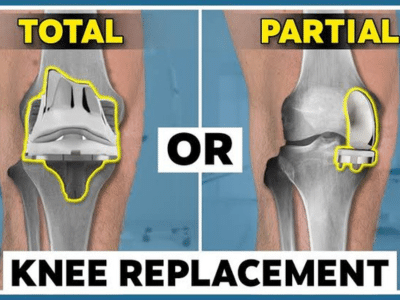
Total vs. Partial Knee Replacement (Microplasty): When Can You Save the Rest of Your Knee?
A healthy human knee consists of three distinct anatomical compartments:
- Medial Compartment: The inner side of the knee (bears ~60–70% of weight).
- Lateral Compartment: The outer side of the knee.
- Patellofemoral Compartment: The space beneath the kneecap.
In many patients, arthritis damages only one specific zone—predominantly the inner (medial) compartment—leaving the remaining two compartments completely healthy.
When is Partial Knee Replacement (Microplasty) Indicated?
Microplasty, or unicompartmental knee arthroplasty, focuses on resurfacing only the damaged compartment while preserving natural ligaments, healthy bone stock, and undamaged cartilage:
- Isolated Compartment Damage: Cartilage degradation is confined strictly to either the medial or lateral side.
- Intact Ligamentous Anatomy: The anterior cruciate ligament (ACL) and posterior cruciate ligament (PCL) remain fully functional and structurally sound.
- Mild to Moderate Deformity: The knee retains good flexibility with no severe, rigid angular contractures.
- No Inflammatory Arthritis: Ideal for localized osteoarthritis rather than widespread inflammatory conditions like rheumatoid arthritis.
Advantages of Partial Knee Replacement (Microplasty)
- Natural Knee Kinematics: Because your own ACL and PCL are completely retained, the knee bends, rotates, and functions with genuine proprioception—feeling like your biological joint.
- Bone-Preserving: Resection is confined strictly to the damaged joint surface.
- Minimally Invasive: Smaller surgical incisions, significantly less blood loss, and reduced postoperative discomfort.
- Rapid Rehabilitation: Most partial knee replacement patients are discharged within 24 to 48 hours and resume low-impact routines much faster.
How Life Changes After a Precision Knee Replacement
A successful joint replacement surgery does far more than relieve local joint pain—it renews daily independence.
- Painless Daily Movement: Morning joint stiffness and constant aching disappear, replaced by smooth, confident motion.
- Freedom from Medication: Reliance on daily painkillers and anti-inflammatory drugs drops dramatically, protecting stomach and kidney health.
- Restored Posture and Straight Alignment: Correcting severe bow-leg or knock-knee alignment restores a natural, symmetrical walking pattern.
- Social and Family Engagement: Attend family celebrations, travel comfortably, and enjoy daily morning walks without scheduling life around painful joints.
Why Choose Dr. Jignesh Pandya: Master Joint Replacement Surgeon
Surgical precision and clinical judgment are the foundation of joint replacement outcomes. As a leading best surgeon for knee replacement surgery, Dr. Jignesh Pandya brings clinical excellence built over years of dedicated service:
- 15+ Years of Focused Orthopedic Experience: Specializing in complex primary total knee replacements, minimally invasive microplasty, and revision surgeries.
- Over 15,000 Successful Surgeries Performed: A deep surgical portfolio that includes high-risk, elderly patients, severe deformities, and intricate ligament cases.
- Meticulous Precision Techniques: Ensuring sub-millimeter component placement and balanced soft-tissue tension for extended implant durability
- Personalized Patient Care: Individualized rehabilitation and pain-management protocols tailored to every patient’s lifestyle goals.
World-Class Orthopedic Care at Dwarkesh Multispeciality Hospital, Vadaj
Recognized as a best hospital for knee replacement surgery in Ahmedabad, Dwarkesh Multispeciality Hospital provides end-to-end orthopedic solutions:
- Laminar Airflow Modular Operation Theaters: Ultra-clean operating environments that exceed international infection-control standards.
- Multidisciplinary Critical Care Support: 24/7 in-house intensive care unit (ICU) and medical specialists to manage blood pressure, diabetes, and cardiac health.
- Dedicated Physiotherapy & Rehabilitation Center: Focused physical therapists guiding safe mobility within hours of surgery.
- Hassle-Free TPA & Cashless Insurance Desk: Smooth documentation support for major government schemes and private insurers.
Stop Letting Fear Dictate Your Quality of Life
You do not have to spend your golden years confined to a chair, skipping family celebrations, or relying on heavy painkiller regimens that harm your kidneys and stomach. Having diabetes, blood pressure issues, or a cardiac history does not mean you have to surrender to permanent knee pain.
Experience the safest, most precise best robotic knee replacement surgery in Ahmedabad with the USA-based CORI system.
Consult with an expert robotic knee replacement surgeon in Ahmedabad, Dr. Jignesh Pandya, at Dwarkesh Multispeciality Hospital, Vadaj, and take your first confident, worry-free step toward an active, pain-free future.
Frequently Asked Questions
Q1: How long will an artificial knee implant last?
Q2: How quickly can I stand and walk after surgery?
Q3: Is partial knee replacement permanent, or will I need total replacement later?

- World-Class Healing, Trusted Care: Your Complete Guide to Medical Tourism at Dwarkesh Multispeciality Hospital, Ahmedabad - October 2, 2026
- Reclaim Your Stride: The Ultimate Guide to Hip Replacement Surgery in Ahmedabad - September 28, 2026
- Total vs. Partial Knee Replacement Surgery: Reclaim an Active, Pain-Free Life at Any Age - September 25, 2026
About Us
Dwarkesh Multispeciality Hospital is dedicated to providing high-quality healthcare with advanced medical facilities and experienced doctors. We focus on patient-centered care, ensuring safe, reliable, and compassionate treatment for every patient.
Contact Info